Introduction
A healthcare website is often one of the first places patients visit when researching a doctor, clinic or hospital. Before making a phone call or booking an appointment, many patients use websites to learn about services, providers and healthcare facilities.
However, not all healthcare websites create a positive experience. In some cases, common website issues can make it difficult for patients to find information, build trust or take the next step.
Mistake #1: Not Having A Mobile-Friendly Website
Many healthcare searches now occur on smartphones and tablets.
A modern healthcare website should provide a seamless experience across smartphones, tablets and desktops to support patient accessibility.
Patients expect websites to work smoothly across different devices. If a website is difficult to use on mobile, visitors may leave before finding the information they need.
A Mobile-Friendly Website Should Provide
Mistake #2: Slow Loading Pages
Website speed plays an important role in user experience.
Patients often expect pages to load quickly. Slow-loading websites can create frustration and may discourage visitors from exploring further.
Common Causes of Slow Websites
- Large image files
- Excessive plugins
- Poor hosting
- Unoptimized code
Mistake #3: Difficult Navigation
Patients visit healthcare websites to find information quickly.
Complicated menus and confusing layouts can make it harder for visitors to locate important details.
Healthcare Websites Should Make It Easy To Access
- Services
- Doctor profiles
- Contact information
- Location details
- Appointment information
Mistake #4: Missing Contact Information
Patients should never struggle to find ways to contact a healthcare provider.
Contact information should be clearly visible throughout the website.
Important Details Include
Mistake #5: Outdated Content
Healthcare information changes over time.
Outdated service pages, incorrect contact details or old announcements can create confusion and affect trust.
Healthcare Providers Should Periodically Review
- Services
- Provider information
- Contact details
- Business hours
- Website content
Mistake #6: No Clear Service Information
Patients want to understand what services a healthcare provider offers.
If service pages are incomplete or difficult to find, visitors may leave without taking action.
Healthcare Websites Should Clearly Explain
- Available services
- Specialties
- Treatment areas
- Healthcare solutions
- Patient information
Mistake #7: Poor User Experience
A website should be easy and pleasant to use.
Common User Experience Issues
- Cluttered layouts
- Small text
- Poor readability
- Broken links
- Inconsistent design
Mistake #8: Lack Of Trust Signals
Trust is an important factor in healthcare decision-making.
Trust signals are also an important part of healthcare branding because they influence how patients perceive credibility and professionalism.
Patients often look for signals that help them evaluate a provider.
Examples Include
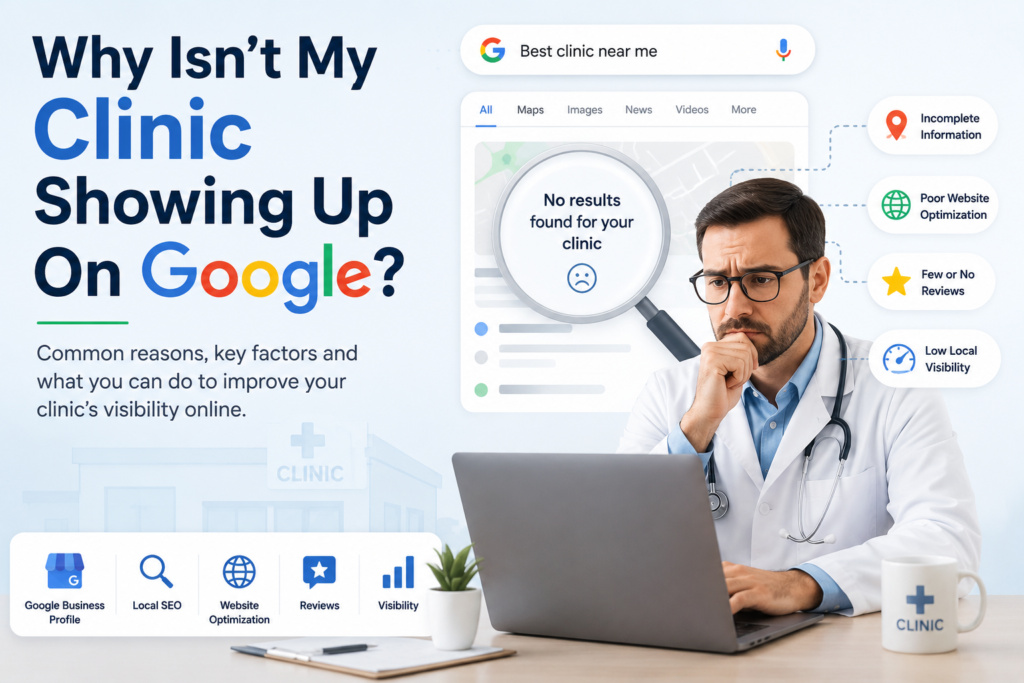
Mistake #9: Ignoring Local Visibility
A healthcare website does not operate in isolation.
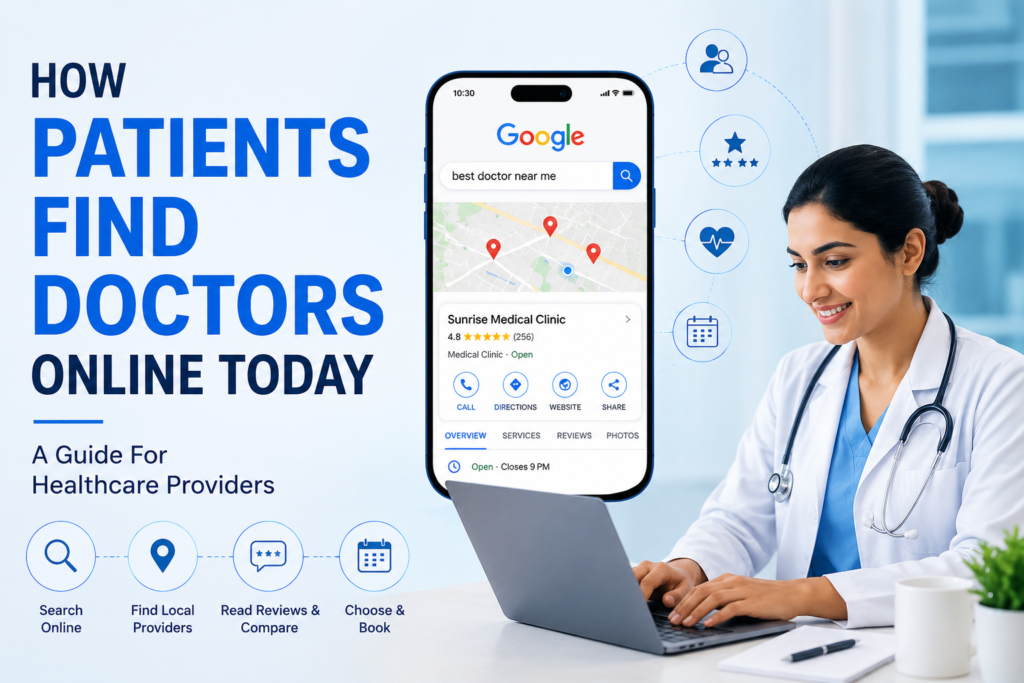
Many patients discover healthcare providers through Google Search, Google Maps and local search results.
Healthcare Organizations Should Ensure
- Contact information is consistent
- Google Business Profile is maintained
- Location information is accurate
- Local visibility is supported
Mistake #10: Not Updating The Website Regularly
A website should not be treated as a one-time project.
Healthcare organizations evolve over time, and websites should reflect those changes.
Regular Updates May Include
- New services
- Updated provider information
- Blog articles
- Facility updates
- Business information
Why These Mistakes Matter
Healthcare websites often serve as a digital introduction to a provider.
When patients encounter poor usability, missing information or outdated content, they may choose to explore other options.
A Healthcare Website Should Support
Building A Better Healthcare Website
Healthcare websites should focus on the needs of patients.
Combining a professional website with Healthcare SEO can help healthcare providers improve both visibility and patient discovery.
Key Priorities Include
Conclusion
Healthcare websites play an important role in patient discovery, trust and engagement.
Common issues such as poor mobile usability, slow loading speeds, missing information and outdated content can negatively affect the patient experience.
A well-designed healthcare website supports both patients and healthcare organizations by making information accessible, building confidence and improving digital presence.
🏢 About ScaleDrive
ScaleDrive helps healthcare businesses improve websites, online visibility, branding and digital presence through healthcare-focused digital growth solutions.
Is Your Healthcare Website Helping Or Hurting Patient Experience?
A modern, user-friendly healthcare website can improve patient trust, accessibility and online visibility while supporting long-term digital growth.