Introduction
Healthcare websites have become an important part of how patients discover, evaluate and connect with healthcare providers. Whether someone is searching for a doctor, clinic, hospital or healthcare service, a website often plays a key role in shaping first impressions.
As patient expectations continue to evolve, healthcare websites must do more than simply provide basic information. They should offer a positive user experience, support accessibility and help patients find the information they need quickly and confidently.
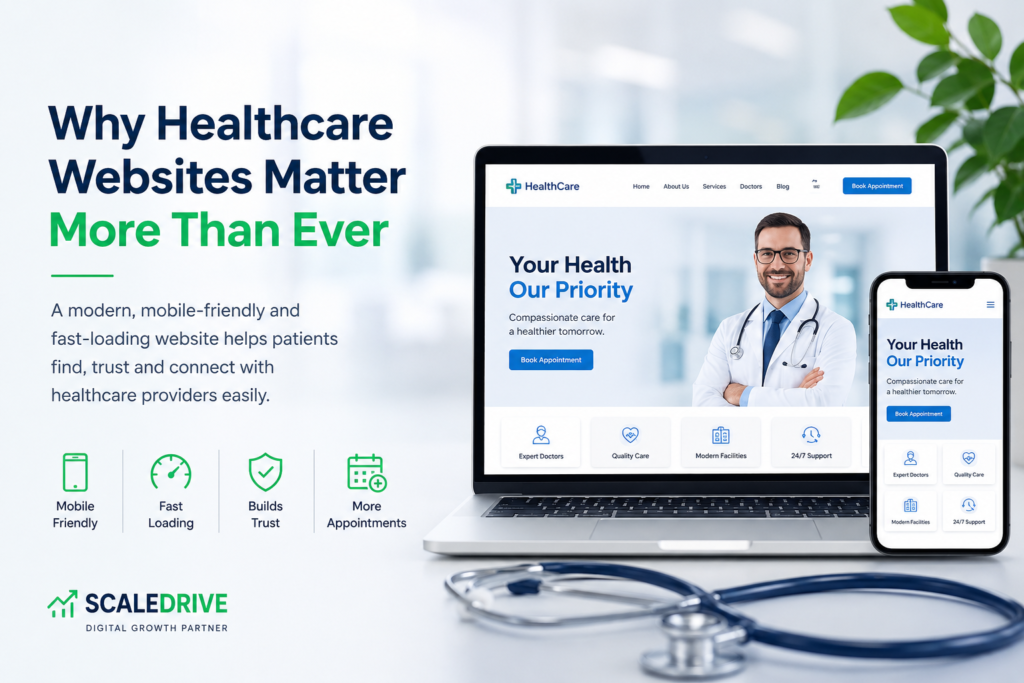
Why Healthcare Websites Matter More Than Ever
Today’s patients often begin their healthcare journey online.
A professionally designed healthcare website can help organizations create a stronger first impression while supporting patient trust and accessibility.
Before making contact, many patients may:
- Search for healthcare providers
- Compare clinics and hospitals
- Read service information
- Review doctor profiles
- Explore patient reviews
Feature #1: Mobile-Friendly Design
A significant portion of healthcare searches now occur on smartphones and tablets.
Patients expect websites to function smoothly across all devices.
A Mobile-Friendly Website Should Provide
Feature #2: Fast Loading Speed
Website performance plays an important role in patient experience.
Slow websites can create frustration and may discourage visitors from exploring further.
Fast-Loading Websites Help Patients
- Access information quickly
- Navigate more efficiently
- Enjoy a smoother browsing experience
Feature #3: Clear Contact Information
Patients should be able to find contact details without difficulty.
Important Information Should Include
Feature #4: Dedicated Service Pages
Patients want to understand what services a healthcare provider offers.
Dedicated Service Pages Can Help Explain
Feature #5: Professional Doctor Profiles
Many patients want to know more about healthcare providers before making contact.
Doctor Profile Pages May Include
- Qualifications
- Areas of expertise
- Professional experience
- Clinical interests
- Professional photographs
Feature #6: Google Maps Integration
Location information remains important for healthcare providers.
Google Maps Integration Can Help Patients
- Find clinic locations
- Access directions
- Estimate travel times
Feature #7: Patient-Friendly Navigation
Healthcare websites should make information easy to find.
Patients Should Be Able To Quickly Access
Feature #8: Trust Signals And Credentials
Trust plays a major role in healthcare decision-making.
Trust signals also contribute to effective healthcare branding, helping patients feel more confident when evaluating healthcare providers.
Healthcare websites should showcase information that helps establish credibility.
Examples Include
Feature #9: Secure Website (HTTPS)
Website security is important for both organizations and patients.
A Secure Website Helps
- Protect data
- Improve trust
- Support a safer browsing experience
Feature #10: Educational Content And FAQs
Patients frequently search for healthcare information online.
Educational content is also an important part of a long-term Healthcare SEO strategy because it helps answer patient questions and improve online visibility.
Educational Content Can Help Answer Questions About
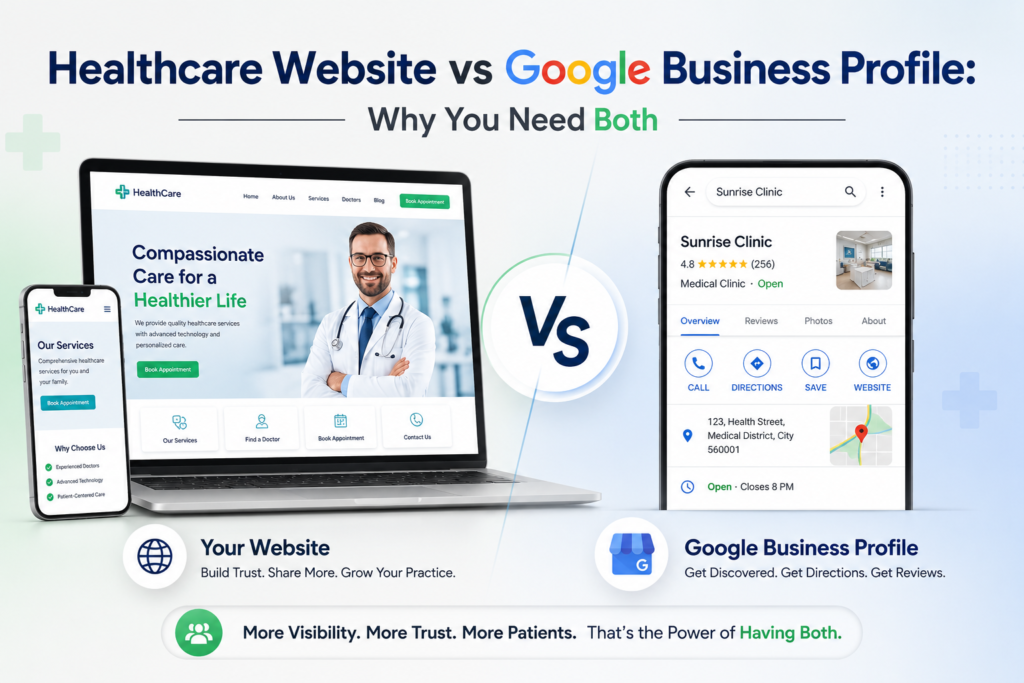
Feature #11: Google Business Profile Integration
Healthcare websites and Google Business Profiles often work together.
Patients may discover a provider through Google Search or Google Maps before visiting the website.
Learn more in our article on Why Google Business Profile Matters For Healthcare Providers.
Feature #12: Contact And Enquiry Forms
Many patients prefer online communication options.
Simple Forms Allow Visitors To
- Ask questions
- Request information
- Express interest in services
The Importance Of Patient Experience
While individual features are important, the overall patient experience matters most.
Healthcare Websites Should Aim To Be
Looking Ahead To The Future
Patient expectations will continue to evolve as technology advances.
AI-powered discovery is becoming increasingly important. You can learn more in our article on How AI Search Is Changing Healthcare Visibility.
Healthcare Websites May Increasingly Need To Support
Conclusion
Healthcare websites play an important role in patient discovery, trust and engagement.
Features such as mobile-friendly design, fast performance, professional provider profiles, educational content and clear contact information help create a better patient experience.
A patient-focused healthcare website is no longer simply a marketing asset—it has become an important part of how healthcare organizations communicate and connect with the people they serve.
Related Healthcare Growth Resources
🏢 About ScaleDrive
ScaleDrive helps healthcare providers build stronger Healthcare Growth Systems through healthcare websites, Healthcare SEO, Google Business Profile optimization, branding and digital visibility strategies.
Does Your Healthcare Website Include These Essential Features?
A modern healthcare website can help improve patient experience, strengthen trust and support long-term digital growth.